




Stress Relief Through Horsemanship
- Michelle Enos
- Jun 23
- 6 min read
There is a certain kind of tired that sleep does not fix. It is the tired that comes from holding everything together, answering the text, making the appointment, staying calm for everyone else, and pushing through even when your body has been asking you to slow down for a long time. Stress relief through horsemanship can feel different because it meets that deeper layer - the part of you that is not looking for one more coping trick, but for a real exhale.
For many overwhelmed adults, stress is not just mental. It lives in the shoulders, the jaw, the chest, the gut. It shows up as irritability, racing thoughts, brain fog, shutdown, tears that come out of nowhere, or the strange feeling of being disconnected from your own life while still functioning inside it. Horses can help interrupt that pattern, not by asking you to perform or explain yourself perfectly, but by inviting you back into presence.
Why stress relief through horsemanship feels different
A horse does not care how productive you have been this week. It does not care if you answered every email, kept everyone happy, or looked composed while falling apart inside. Horses respond to what is real. That can be surprisingly relieving for people who spend much of their lives managing, masking, or pushing past their own needs.
In a calm, trauma-informed setting, horsemanship is not about getting it right. It is about noticing. You notice your breathing. You notice tension in your body. You notice how quickly your mind speeds up, or how hard it is to stay present when something feels uncertain. A horse notices those things too, often before you have words for them.
That is part of why this work can be so grounding. Horses are highly attuned animals. They respond to energy, body language, pace, and emotional congruence. When someone arrives anxious, shut down, scattered, or hyper-alert, the horse may reflect that in subtle ways. Not as judgment. Just information. That kind of honest feedback can help people begin to recognize their own nervous system patterns with more compassion and less shame.
The nervous system piece matters
When you have been under chronic stress, your body can start to treat ordinary life like an emergency. You may feel wired but exhausted, easily overwhelmed, emotionally reactive, or numb. You may know logically that you are safe and still feel like you cannot settle.
This is where horsemanship can offer something talk alone sometimes cannot. Being with a horse invites an embodied experience. Instead of only describing your stress, you begin to feel what regulation is like in real time.
Maybe that looks like standing next to a horse and realizing you have been holding your breath. Maybe it looks like softening your posture and watching the horse soften too. Maybe it means learning to slow your movements, stay connected to the ground beneath your feet, and let your body experience safety in relationship.
For people living in survival mode, these moments matter. They create small but meaningful shifts. The nervous system begins to learn that calm is possible, that connection does not have to feel demanding, and that presence can feel safer than pressure.
What stress relief through horsemanship can look like
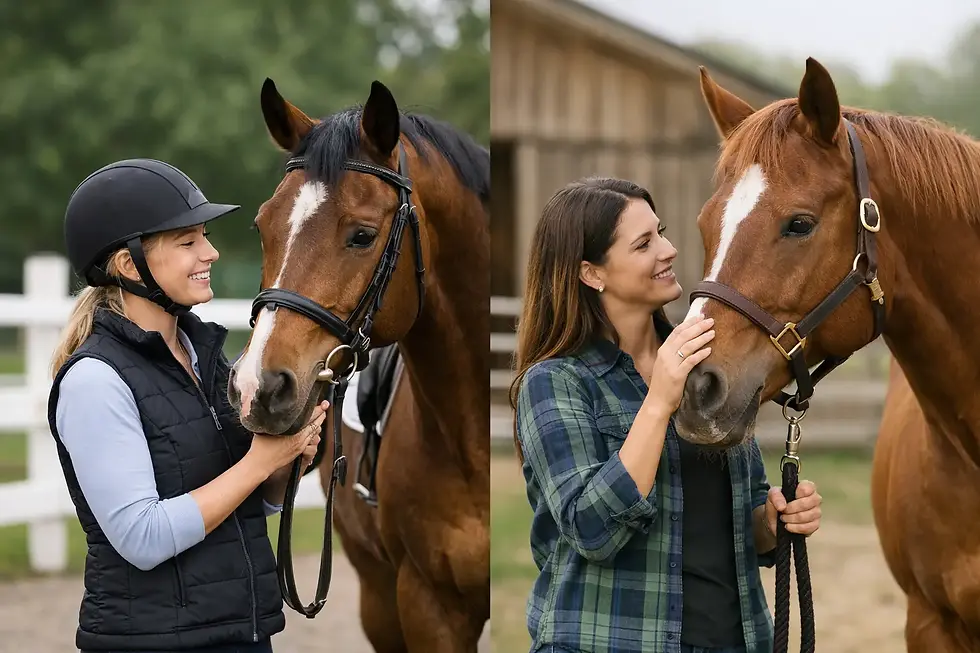
This kind of work is often quieter than people expect. It may involve grooming, leading, observing, breathing, or simply standing with a horse in stillness. Riding is not always part of the process, and in many therapeutic settings it is not the focus at all.
That can be especially important for people who feel intimidated by horses or assume they need prior experience. You do not need to know horse terminology or come in with confidence. In fact, many people arrive feeling uncertain, emotionally tired, or far removed from themselves. That is welcome.
A session might begin with noticing how you are arriving that day. Fast. Numb. Frayed. Distracted. Then, with support, you might engage in a simple activity with the horse and observe what comes up. Are you rushing? Apologizing? Overthinking? Freezing when you are unsure? Struggling to ask for space? The horse often helps make these patterns visible in a way that feels immediate and honest.
From there, the work becomes less about fixing yourself and more about building awareness, choice, and regulation. You practice slowing down. You experiment with boundaries. You feel what happens when you stay present instead of abandoning yourself. Those are life skills, but they do not feel abstract when you are learning them in relationship with a horse.
Why horses can help people who are burned out
Burnout is not always dramatic. Sometimes it looks like competence on the outside and emptiness on the inside. You keep going because people need you. You hold everything together because that is what you do. Over time, though, your body starts to protest. Motivation drops. Patience gets thin. Rest does not really restore you.
Horses can be powerful companions for burnout because they invite a different pace. Around them, rushing tends not to work very well. Pretending tends not to work either. They ask for steadiness, clarity, and presence. That can feel unfamiliar at first, especially for people used to living in urgency.
But that slower pace is part of the medicine. When you step into a ranch environment and hear hooves on the ground instead of notifications on a screen, something often begins to shift. The body gets more space to come down from constant stimulation. The mind gets a break from performance. You start relating to yourself from a more honest place.
This does not mean one session erases burnout. Real healing usually takes time, especially if stress has been building for years. But many people feel relief simply from being in an environment where they do not have to keep proving anything.
It is not magic, and it is not one-size-fits-all
Horsemanship can be deeply supportive, but it is not a cure-all. Some people feel connected to horses right away. Others need time to feel safe enough to settle in. For someone with significant trauma, fear of large animals, or a nervous system that is already highly activated, pacing matters.
That is why a trauma-informed approach is so important. The goal is not to push emotional breakthroughs or create intense experiences for the sake of it. The goal is safety, attunement, and working at a pace the body can actually integrate.
It also helps to be honest about what you need. If your stress is mostly about lack of sleep, medical issues, or unsustainable life demands, horsemanship can support regulation, but it may need to be part of a larger healing picture. Boundaries, therapy, rest, medication, grief work, practical support, or changes at home and work may all matter too. Usually, it is not either-or. It is both.
Who this work often resonates with
Stress relief through horsemanship tends to resonate with people who are tired of staying in their heads. That includes high-functioning adults carrying anxiety beneath the surface, caregivers who have forgotten how to receive support, teens who feel overwhelmed by pressure, and people who have tried traditional settings and still do not feel fully met.
It can be especially meaningful for those who struggle to talk about what they feel. When emotions are hard to name, an experiential approach offers another way in. You do not always have to explain everything to begin healing. Sometimes you start by noticing your breath, the ground, the horse beside you, and the moment your body realizes it does not have to brace quite so hard.
In places like Felton and the greater Santa Cruz County area, where many people are balancing intense workloads with a deep longing for nature and meaningful connection, this kind of support can feel like coming back to something essential.
What people often take with them
The value of horsemanship is not limited to the ranch. Over time, people often begin to recognize their stress responses sooner and respond with more care. They notice when they are speeding up. They become more aware of their boundaries. They learn that calm is not the same as collapse and that softness is not weakness.
They also begin to trust themselves differently. Not because everything in life gets easier, but because they feel more connected to their own signals. More able to pause. More able to choose. More able to stay present without getting swallowed by overwhelm.
That kind of change is subtle, but it is real. It shows up when you take a fuller breath before reacting. When you say no without spiraling. When you feel emotion move through instead of getting stuck. When your body starts to believe that you do not have to live at full alert all the time.
If you have been carrying stress for so long that it feels normal, being with horses can offer a gentle reminder that your body was never meant to stay in survival mode forever. Sometimes healing begins with something very simple - a quieter place, a steady presence, and enough safety to finally soften.


Comments