



What Happens in Equine Therapy?
- Michelle Enos
- Jun 3
- 6 min read
If you are wondering what happens in equine therapy, the honest answer is this - usually less performance, less pressure, and more real connection than people expect. There is no need to know horses, love horses, or show up with the right words. Most people come in carrying too much for too long, and the ranch simply gives their nervous system a different place to begin.
For many overwhelmed adults, traditional therapy can feel helpful and still not fully reach the part of them that is exhausted, braced, or disconnected. Equine therapy offers another path. Instead of staying only in conversation, you are invited into an experience - one that includes the natural environment, your body’s signals, and the presence of a horse that responds honestly in the moment.
What happens in equine therapy sessions?
A session often begins quietly. You might arrive, take a breath, notice the air, the sounds around you, and the pace of the ranch compared to the pace you just left behind. Your therapist may start with a simple check-in about how you are feeling, what has been heavy lately, or what you are hoping for that day.
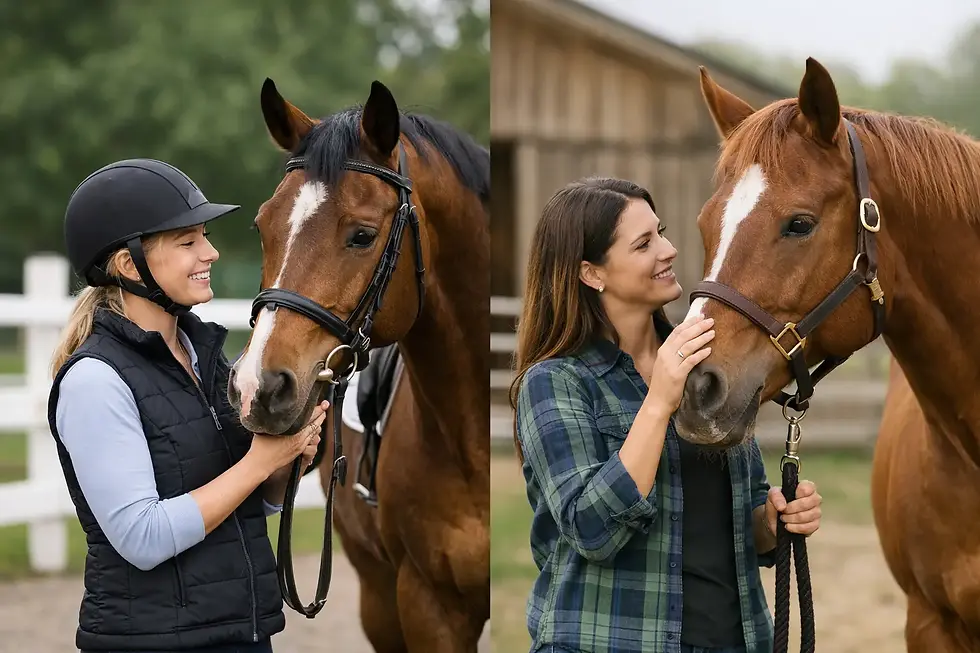
From there, the work is shaped around your needs. Sometimes that means standing near a horse and noticing what comes up in your body. Sometimes it means grooming, leading, observing herd behavior, or practicing a structured exercise on the ground. In trauma-informed equine-assisted psychotherapy, the focus is not on riding lessons or getting something “right.” It is on awareness, regulation, connection, and relational healing.
You may be invited to notice things you usually move past too quickly. Are your shoulders tense? Is your breathing shallow? Do you feel the urge to overperform, shut down, please, avoid, or take control? Horses tend to bring these patterns into view without judgment. Because they are highly sensitive to energy, body language, and presence, they often respond to what is happening beneath the surface, not just what is being said.
That is part of what makes this work feel so different. A horse is not analyzing you. A horse is simply responding. If you are anxious, distracted, guarded, or unsure, that may show up in the interaction. If you become more grounded and present, the horse may respond differently. These moments can create powerful insight, especially for people who have spent years functioning well on the outside while feeling flooded or disconnected inside.
What happens in equine therapy emotionally?
Sometimes people expect something dramatic. More often, the shifts are subtle at first. You may notice your body soften. You may realize how often you push past your own limits. You may feel emotion come up in a way that surprises you, not because anyone forced it, but because your system finally feels safe enough to stop holding everything so tightly.
Equine therapy can bring up grief, relief, frustration, tenderness, fear, or joy. All of that can be part of the process. Healing is not always calm in a neat, polished way. Sometimes it looks like recognizing how long you have been in survival mode. Sometimes it looks like practicing a boundary and feeling what happens when it is respected.
For clients with anxiety, trauma, burnout, ADHD-related overwhelm, or emotional dysregulation, this kind of work can be especially meaningful because it is experiential. You are not only talking about patterns. You are noticing them in real time, with support, and beginning to try something different.
A horse might help you see when you are approaching too fast, asking too much of yourself, or disconnecting from your own cues. It might also help you experience what happens when you slow down enough to reconnect. That kind of embodied learning tends to stay with people.
Why horses are part of the healing process
Horses are prey animals, which means they are naturally attuned to safety, threat, and regulation in their environment. They notice subtle shifts in energy and body language quickly. In a therapeutic setting, that sensitivity can offer immediate feedback.
This does not mean horses are reading your mind or performing magic. It means they are honest. They live in the present. They do not care whether you look composed, productive, successful, or put together. They respond to what is real.
For someone who is used to masking distress, that can feel both vulnerable and freeing. You do not have to explain yourself perfectly. You do not have to impress anyone. You get to practice being present with another living being in a way that is grounded, relational, and often deeply regulating.
This is also why equine therapy is not about using horses as tools. In a trauma-informed model, the relationship matters. The horse is a partner in the experience, and the therapist helps create emotional safety while guiding reflection, awareness, and meaning-making.
What happens in equine therapy if you are nervous around horses?
That is completely okay. A good equine therapy experience does not require confidence with horses from day one. In fact, many people arrive unsure of what to expect, worried they will do something wrong, or convinced they are not “horse people.”
Sessions can be paced gently. You may begin by watching from a comfortable distance, learning about the horse’s cues, or simply standing nearby and noticing your own responses. There is room for choice. There is room to pause. There is room to say, “This feels like enough for today.”
That matters, especially for people whose nervous systems are already overloaded. Healing does not usually happen through force. It happens through enough safety, enough support, and enough trust to let something shift.
What equine therapy is not
It helps to clear up a common misunderstanding. Equine therapy is not the same as horseback riding lessons, and it is not a petting experience designed to make you feel better for an hour. It is a therapeutic process led by a trained mental health professional, with the horse included as part of that process.
Some sessions may feel peaceful. Others may bring up discomfort, old patterns, or strong emotion. That does not mean something is going wrong. It may mean something meaningful is being noticed at a pace you can work with.
It is also not one-size-fits-all. For some people, equine therapy becomes a powerful part of trauma healing or nervous system regulation. For others, it may be one supportive piece alongside other care. It depends on your history, your goals, your readiness, and the quality of the therapeutic relationship.
The kinds of changes people often notice
Over time, many people begin to experience more than insight. They may feel more grounded in their body, more aware of their limits, and more able to recognize stress before it becomes overwhelming. They may begin to trust their own signals again.
That can show up in everyday life in quiet but important ways. Maybe you pause before saying yes when you mean no. Maybe you catch yourself bracing and soften your breath. Maybe you feel less reactive, less numb, or less alone inside your own experience.
Clients often describe a growing sense of self-connection. Not a perfect, always-calm version of themselves, but a more honest one. Someone who can stay present a little longer. Someone who does not have to perform wellness to begin healing.
At a place like Deerhorn Ranch in Felton, that process is supported by the setting itself - open space, slower rhythms, and the kind of relational work that can help people come back to themselves in a way that feels real.
Is equine therapy right for you?
If you are tired of talking about stress while still feeling stuck in it, this approach may be worth considering. If you feel emotionally overloaded, disconnected from yourself, or constantly on edge, working with horses in a trauma-informed therapeutic setting can offer a different entry point.
You do not need to be in crisis. You do not need to have the perfect explanation for what hurts. You only need some willingness to show up as you are.
Sometimes healing begins with a conversation. Sometimes it begins the moment your body realizes it can exhale. Around horses, in a quieter space, many people finally get to feel that difference - and that can be the start of something deeply restorative.


Comments