




Equine Assisted Therapy Success Stories
- Michelle Enos
- May 28
- 6 min read
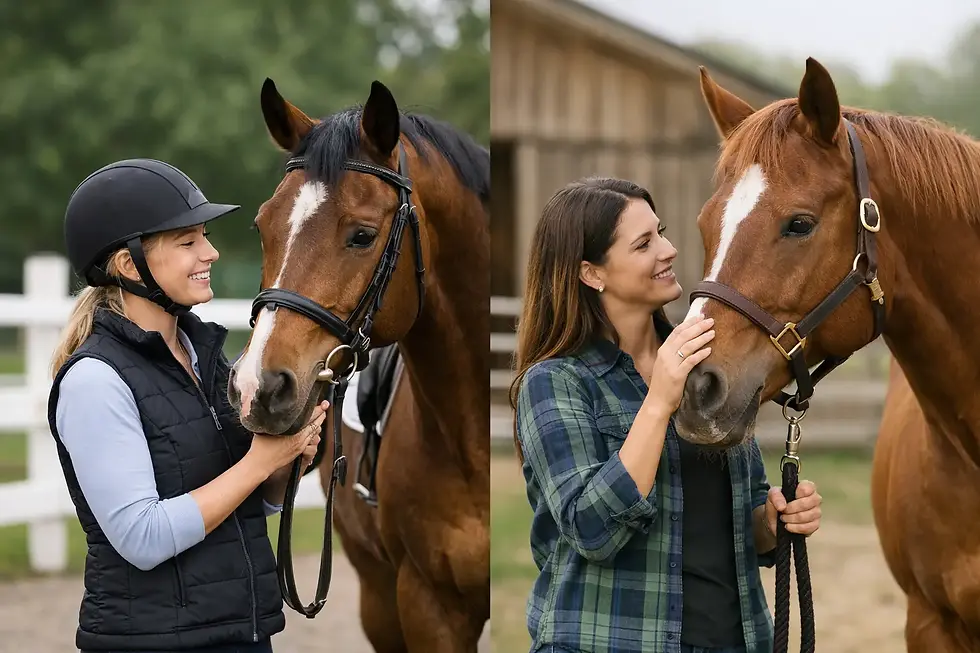
Sometimes the shift begins with something very small. A woman who has spent months feeling tightly wound notices her shoulders drop for the first time all week while standing beside a horse. A teen who says, “I’m fine,” suddenly starts talking after a horse turns and walks away when he masks what he feels. A burned-out caregiver realizes, in real time, how much of her life has been spent pushing past her own limits. These are the kinds of equine assisted therapy success stories that stay with people, not because they are dramatic, but because they are honest.
What makes this work so powerful is that horses respond to what is happening beneath the surface. They do not care how polished someone looks, how productive they are, or how well they explain themselves. They respond to energy, presence, tension, and connection. For people who have been stuck in survival mode for a long time, that kind of feedback can feel surprisingly relieving. It is direct, real, and free from judgment.
Why equine assisted therapy success stories feel different
A lot of healing stories sound neat and linear. Real life usually is not. Most people who seek equine-assisted psychotherapy are not looking for a miracle moment. They are looking for relief from anxiety that never fully turns off, burnout that rest does not seem to fix, grief that lives in the body, or a sense of disconnection they cannot quite talk their way through.
That is why these stories often sound different from traditional therapy testimonials. The change is often experiential before it becomes verbal. Someone notices they can breathe more deeply. They realize they no longer feel the urge to perform. They begin to recognize what safety feels like in their body. The progress can look quiet from the outside, but internally it is significant.
Horses help create that shift because they invite awareness rather than performance. In a trauma-informed setting, the goal is not to make someone do more. It is to help them slow down enough to notice what is happening, build regulation, and experience relationship without pressure. For many overwhelmed adults and teens, that is where healing actually starts.
Stories of change that happen one moment at a time
From constant anxiety to feeling grounded again
One common theme in equine assisted therapy success stories is the person who has been functioning on the outside while feeling overwhelmed on the inside. She is working, parenting, caregiving, managing schedules, and answering texts, all while her nervous system stays on high alert. She may be used to hearing, “You seem like you have it together.” Inside, she feels exhausted and disconnected.
With horses, that inner state becomes easier to notice without shame. A horse may hesitate to approach when her body is tense, even if she is smiling. When she softens her breathing and settles her pace, the horse may move closer. That simple interaction can become a turning point. She sees that calm is not just an idea. It is something her body can practice.
Success in this kind of story does not necessarily mean anxiety disappears overnight. More often, it means she starts recognizing the early signs of dysregulation and learns how to come back to herself sooner. She begins to trust that calm is available, not all the time, but more often than before.
From emotional shutdown to honest connection
For some teens and adults, the struggle is not obvious panic. It is numbness, shutdown, or the feeling of being far away from themselves. They may have learned long ago that emotions were unsafe, inconvenient, or too much for other people. Talking directly about feelings can feel impossible.
Horses have a way of meeting that protective pattern without forcing it. A client might notice that the horse walks off when she approaches too quickly, then stays nearby when she slows down and pays attention. Suddenly the session is not about “explaining your emotions correctly.” It is about relationship, pacing, and consent. Those are big themes for anyone healing trauma or attachment wounds.
Over time, that can help someone rebuild trust in their own experience. They start to say things like, “I didn’t realize how disconnected I was,” or “I can tell when I’m leaving myself now.” That is a deep kind of progress. It is not flashy, but it changes how a person moves through the rest of life.
From burnout to healthier boundaries
Another story shows up often with caregivers, helping professionals, and high-capacity people. They are used to overriding their needs. They keep going long after their body says stop. Then one day, they are not just tired. They are depleted.
Horses can reveal this pattern quickly. If a client comes in pushing, over-efforting, or trying to control the interaction, the horse may resist, disengage, or mirror that agitation. When the client shifts from striving to listening, the whole interaction changes. That moment matters because it shows, not just tells, that relationship works better without force.
For someone recovering from burnout, success may look like learning to pause before saying yes. It may look like recognizing that rest is not laziness. It may look like feeling less responsible for everyone else’s emotional state. These changes often begin in the arena, then ripple outward into work, family, and everyday life.
What these success stories have in common
Even though every person’s healing path is different, most equine assisted therapy success stories share a few important threads. The first is safety. People tend to open and change when they feel emotionally safe enough to stop performing.
The second is embodiment. Many people understand their stress intellectually, but their body is still bracing. Horses help bring attention back to what is happening physically - breathing, posture, tension, pacing, distance, and regulation. That makes healing more tangible.
The third is relationship. Horses are not props in the process. They are responsive, intuitive partners. In a well-held therapeutic setting, the relationship between client, therapist, and horse creates opportunities to practice boundaries, trust, repair, presence, and authenticity.
There is also a practical truth here. This work is not magic in the sense of instant transformation. It is effective because it offers a different pathway. For some people, especially those who feel stuck in talk therapy or overwhelmed by traditional office settings, that difference matters.
What success can really look like in equine-assisted psychotherapy
Success is personal. For one person, it is finally crying after months of feeling numb. For another, it is being able to say no without spiraling into guilt. For a teen, it might be more confidence, less reactivity, and a stronger sense of self. For someone carrying trauma, it may be the first genuine experience of connection that does not feel threatening.
It also helps to be honest about trade-offs. Equine-assisted therapy is not always the right fit for everyone, and it is not meant to replace every other form of care. Some people benefit most from a combination of approaches. Some need more structure, more verbal processing, or additional clinical support alongside experiential work. Good therapy is not about forcing one method to fit everyone. It is about finding what helps a person feel safe enough to heal.
In a place like Deerhorn Ranch in Felton, that can mean stepping out of overstimulation and into a quieter environment where the nervous system has more space to settle. For many people, that setting alone changes what becomes possible.
Why these stories matter if you feel stuck
If you have been carrying too much for too long, success stories can feel complicated. Part of you may feel hopeful. Another part may wonder whether healing like that is really available to you. That hesitation makes sense, especially if you are used to being the capable one or if you have tried other things and still feel exhausted.
The value of equine assisted therapy success stories is not that they promise a perfect ending. It is that they remind you change can begin in ways that are gentler than you expected. Not through pressure. Not through pretending. Through slowing down, noticing what is true, and finding connection that feels real enough for your body to trust.
Sometimes healing starts with a conversation. Sometimes it starts with a horse standing quietly beside you while you remember what it feels like to exhale. That is not a small thing. It is often where everything starts to turn.


Comments