



Adult Guide to Learning Horseback Riding
- Michelle Enos
- Jun 7
- 6 min read
A lot of adults come to horses carrying two things at once - genuine excitement and a quiet fear of looking foolish. If you have been searching for an adult guide to learning horseback riding, you may not need hype or pressure. You may need a calm, honest picture of what starting actually feels like, what helps, and why learning as an adult can be deeply rewarding.
Horseback riding often gets presented as either effortless grace or high-adrenaline sport. Most beginners experience neither at first. What they experience is uncertainty, a body that feels a little stiff, and a surprising amount of emotion. Being around a horse asks for presence. It asks you to notice your breathing, your tension, your habits, and how you respond when something feels unfamiliar. That can be humbling, but it can also be healing.
An adult guide to learning horseback riding starts with mindset
Adults usually learn differently than kids. Children often fall, bounce, and try again without turning it into a story about themselves. Adults tend to bring self-awareness, caution, and a long list of responsibilities into the arena. That is not a weakness. It simply means your learning process may need more patience and more emotional safety.
If you feel nervous, that does not mean horseback riding is not for you. It means your nervous system is paying attention. A good instructor will respect that. They will not shame you for being afraid or push you faster than your body can absorb. The best early lessons build confidence by helping you feel steady, informed, and connected before asking you to do more.
It also helps to let go of the idea that you should progress quickly. Riding is not only about memorizing skills. It is about developing timing, balance, trust, and body awareness. Those things usually grow through repetition. Slow progress is still real progress.
What your first horseback riding lessons may feel like
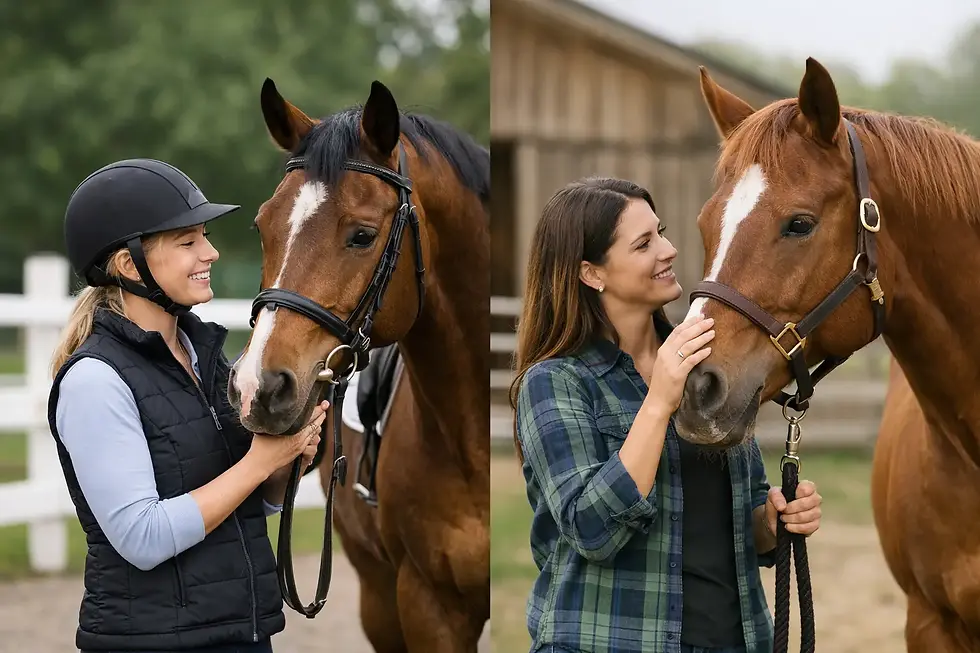
Your first lesson will probably begin on the ground. You may learn how to approach a horse, where to stand, how to hold the lead rope, and how to read basic body language. This part matters more than many beginners expect. Riding starts long before you sit in the saddle.
Once mounted, you may notice how tall everything feels. Even a calm horse can feel big when you are sitting on a moving animal for the first time. Many adults tense their shoulders, grip with their knees, or hold their breath without realizing it. That is normal. A skilled instructor will help you soften rather than simply telling you to relax, which is rarely useful on its own.
The first few lessons are often about walking, stopping, steering, and finding your seat. That may sound simple, but it gives your body a foundation. If you rush to trotting before you feel stable at the walk, you may build anxiety instead of confidence. There is no prize for getting there first.
How to choose the right place to learn
Not every barn is a good fit for every adult beginner. Some are competitive and fast-paced. Some are warm, patient, and oriented toward nervous system regulation and relationship. Neither is automatically wrong, but they create very different learning experiences.
If you are an overwhelmed adult, ask questions before booking lessons. Notice how the instructor talks about beginners. Do they sound kind? Do they explain things clearly? Are the school horses known for being steady and forgiving? Is there room to learn at your own pace, or does everything feel rushed?
The environment matters, too. A noisy, chaotic barn may energize some riders and overwhelm others. If you already spend your life juggling work, caregiving, constant notifications, or chronic stress, a grounded setting can make a real difference. Many adults learn better when they feel safe enough to slow down.
The gear you really need at the beginning
You do not need to buy a whole new identity to start riding. In the beginning, keep it practical. A properly fitted riding helmet is essential. So are boots with a small heel so your foot does not slide through the stirrup. Comfortable pants that allow movement will help more than fashionable ones.
Beyond that, it depends on the program and how often you ride. Gloves can be helpful if your hands are sensitive. Some adults like riding tights right away, while others wait until they know they want to continue. You can build your gear over time.
The bigger point is this: do not let the image of horseback riding intimidate you. You are allowed to be new. You are allowed to arrive without knowing the language, the brands, or the unwritten rules. A healthy learning environment makes room for that.
Fear, confidence, and the adult body
An honest adult guide to learning horseback riding has to talk about fear. Fear is common, especially if you have had injuries, trauma, chronic stress, or years of being the person who has to keep everything together. Sitting on a horse can bring up vulnerability because you cannot control every variable.
Confidence does not usually appear all at once. It grows through experiences that teach your body, not just your mind, that you can meet something new and stay present. That might mean grooming before riding, practicing breathing while mounted, or spending several lessons at the walk until your body stops bracing.
It also helps to respect your physical reality. If you are rebuilding strength, carrying tension, or feeling out of shape, your riding journey may look different from someone else's. Core stability, hip mobility, and balance all matter, but you do not need to be perfectly fit to begin. You simply need an instructor who can meet you where you are.
For some adults, horseback riding becomes more than a skill. It becomes a way to reconnect with their body in a gentler, more compassionate way. That is part of why horse spaces can feel so powerful. They ask for attention, but not performance. Presence matters more.
An adult guide to learning horseback riding without rushing
One of the easiest ways to sabotage early riding is to compare your timeline to someone else's. Adults often think in milestones: posting trot by week three, canter by month two, trail rides by summer. Sometimes that happens. Sometimes it does not. A better question is whether your foundation is becoming steadier.
There is a real trade-off between speed and confidence. Moving quickly can feel exciting, but if your body has not settled into the basics, every new skill may come with extra tension. Going slower can feel frustrating, yet it often creates better balance, clearer communication, and a more enjoyable relationship with riding over time.
You may also discover that what you love most is not what you expected. Some adults come in wanting to ride fast and end up loving groundwork, quiet trail rides, or simply the rhythm of grooming and being near horses. Others enjoy the challenge of learning technique and building strength. It depends on your goals, your temperament, and what your nervous system responds to.
What makes a beginner horse a good teacher
People often focus on finding a good instructor, but the horse matters just as much. A suitable beginner horse is usually steady, tolerant, and clear in their responses. That does not mean dull. It means they can help you learn without escalating every small mistake.
Good school horses teach feel. They let you notice when your body tips forward, when your hands get busy, or when your cues become unclear. They offer feedback in real time. In many ways, horses invite honesty. They respond to what is actually happening in your body, not what you wish you were communicating.
That kind of feedback can be surprisingly grounding. For adults who spend much of life in their heads, horses bring attention back to the present moment. Your breath, your posture, your pace - it all matters. Places like Deerhorn Ranch understand this relational quality deeply, even when the focus is not riding instruction itself.
When horseback riding feels emotional
Sometimes beginners feel silly for becoming emotional around horses. But horses often stir something real. Relief. Grief. Joy. Tenderness. Frustration. If you have been living in a constant state of pressure or overstimulation, the simple act of slowing down enough to connect with a horse can open a door you did not expect.
That does not mean every lesson becomes a profound life event. Sometimes a lesson is just a lesson. Still, many adults find that riding asks them to practice trust, self-regulation, and self-compassion in ways that carry beyond the barn. You notice how hard you are on yourself. You notice when you brace. You notice how much better things go when you stop forcing and start listening.
There is something quietly restorative about that.
A few expectations that will help
You will probably feel awkward at first. Your legs may be sore in strange places. You may forget instructions five seconds after hearing them. You may have one great lesson followed by one that feels clumsy. None of that means you are failing.
What matters most is consistency and a learning environment that feels emotionally safe. The adults who stay with riding are not always the boldest. Often, they are the ones who let themselves be beginners, ask questions, and keep showing up with curiosity.
If horseback riding has been calling to you for years, it may be worth listening to that nudge. Start small. Choose kind people. Let your body learn at its own pace. Sometimes the most meaningful new beginning is the one that does not ask you to be fearless - only willing.


Comments