




Experiential Therapy Trends 2026 That Feel Human
The person who holds everyone else together often arrives at therapy already exhausted from explaining. They may understand why they feel anxious, shut down, irritable, or disconnected. What they need is not always more insight. They may need a place where their body can slow down enough to feel what safety is like. That is part of what is shaping experiential therapy trends 2026: a growing desire for healing that is felt, practiced, and supported in real relationship, not only talked about.
For overwhelmed adults, caregivers, teens, and people living with the long echo of trauma or chronic stress, this shift makes sense. A nervous system that has been in survival mode does not always respond to pressure, analysis, or another item on the to-do list. Experiential therapy creates room to notice what is happening in the present moment, try something different, and build trust in small, meaningful ways.
Experiential Therapy Trends 2026: From Insight to Experience
Talk therapy remains valuable. Naming a pattern, telling the truth about a hard season, and being deeply heard can be powerful. Yet many people are recognizing that insight alone does not automatically change the way the body responds when the phone rings, conflict rises, grief hits, or life becomes too loud.
In 2026, experiential approaches are likely to be sought out not because people are turning away from thoughtful conversation, but because they want conversation paired with lived practice. Somatic awareness, mindfulness, movement, art, nature-based work, and equine-assisted psychotherapy can help clients notice their internal experience as it unfolds. Instead of only discussing boundaries, for example, a client might feel the difference between moving closer, stepping back, pausing, and choosing what feels safe.
That distinction matters. Healing is often less about performing the “right” response and more about having enough support to recognize a choice where there once only seemed to be an automatic reaction.
Nervous System Regulation Will Keep Moving to the Center
“Regulation” has become a familiar word, sometimes used so broadly that it loses meaning. At its simplest, nervous system regulation is the capacity to notice activation and find a path back toward enough steadiness to stay present. It does not mean being calm all the time. It does not mean never feeling angry, afraid, or overwhelmed.
A trauma-informed experiential therapist helps clients approach these states with curiosity rather than shame. What happens in your shoulders before you shut down? What do you notice in your breath when someone needs something from you? What signals tell you that you are nearing your limit?
This work is particularly relevant for high-functioning people who have learned to push through. They may appear capable at work, at home, or in their community while privately feeling scattered, numb, resentful, or close to collapse. An experiential setting can gently interrupt that pattern. The invitation is not to fix yourself faster. It is to pay attention before your body has to shout.
Nature Will Be Treated as a Setting for Relationship, Not a Quick Fix
More people are looking for therapy outside the familiar office environment. A quiet trail, an open field, a garden, or a ranch can offer a welcome change from traffic, screens, waiting rooms, and the pressure to make eye contact across a desk. Nature often makes it easier to breathe, move, and settle into the present.
Still, nature-based therapy is not simply “being outdoors because outdoors is relaxing.” The setting needs to be held with clinical care, clear boundaries, and attention to each person’s needs. For one client, the sounds and spaciousness of a ranch may feel like relief. For another, weather, unfamiliar surroundings, mobility concerns, or sensory sensitivity may make an outdoor setting less accessible. Good therapy does not assume that one environment works for everyone.
The most meaningful trend is not a picturesque backdrop. It is the thoughtful use of place to support presence, choice, and connection.
Horses will be valued as partners, not props
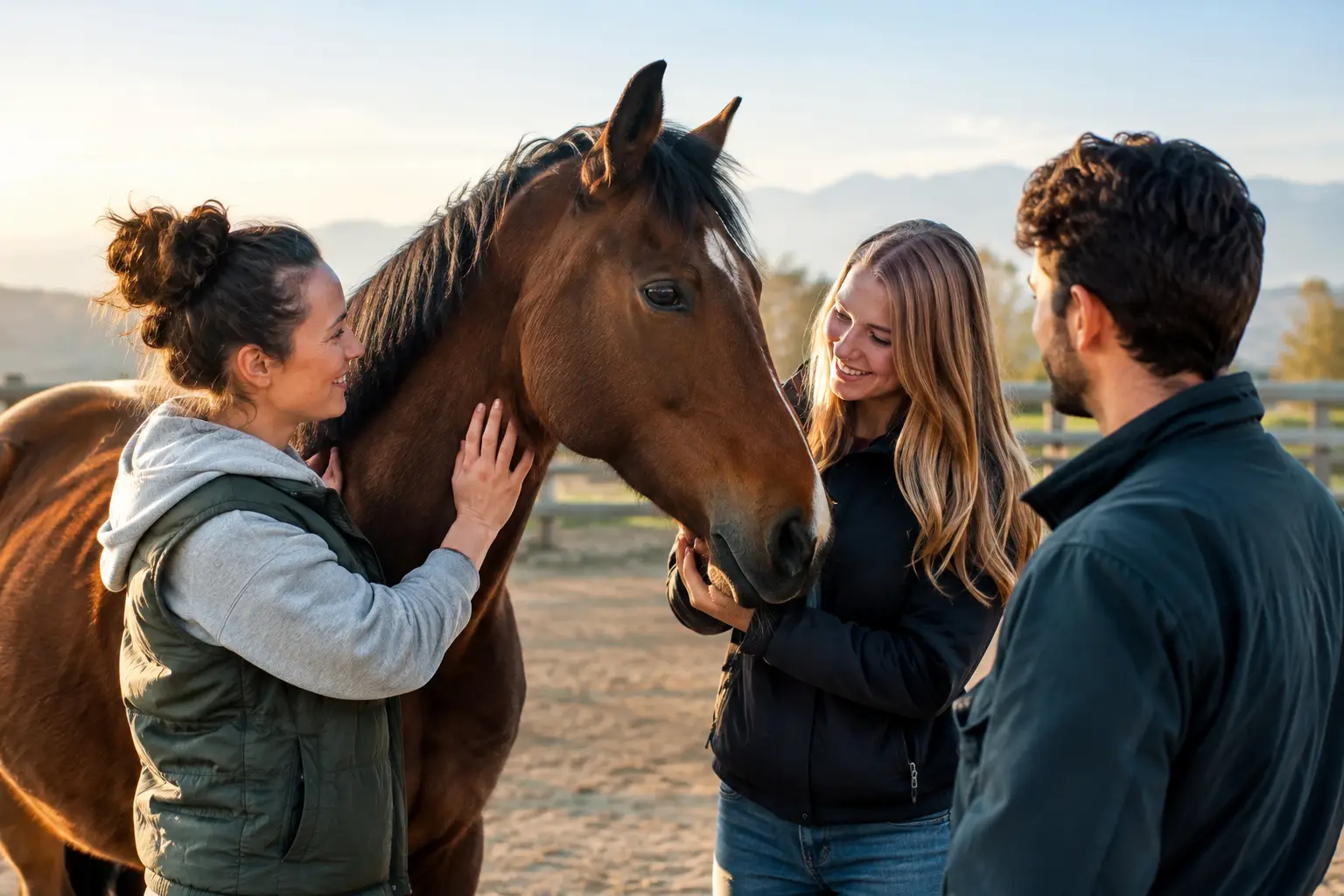
Equine-assisted psychotherapy continues to resonate with people who feel worn out by conventional settings or who struggle to put their experience into words. Horses are responsive, social animals, and their presence can bring attention to pace, boundaries, body language, and relationship. There is no need to ride or have horse experience to participate in many forms of equine-assisted work.
The value is not that a horse provides a simple answer or can diagnose what someone feels. Healing is more nuanced than that. A horse may offer an immediate, embodied moment to explore with a trained therapist: What happened when you approached? What did you notice in yourself? What changed when you slowed down or gave yourself more space?
At Deerhorn Ranch, this kind of work is grounded in trauma-informed care, emotional safety, and relationship. The horse is not a tool for performance. The experience becomes an opportunity to practice awareness, consent, steadiness, and authentic connection.
Safety, Consent, and Therapist Training Will Matter More
As experiential therapy becomes more visible, discernment matters. A meaningful experience is not automatically a therapeutic one, and intensity is not the same as healing. People seeking support deserve to know who is facilitating, what training they have, how they handle emotional activation, and what choices are available if something does not feel right.
Trauma-informed experiential therapy respects pacing. Clients should not be pressured to disclose painful memories, touch an animal, participate in a group activity, or “push through” discomfort to prove commitment. A skilled practitioner watches for signs of overwhelm, collaborates on goals, and understands that opting out can be a healthy act of self-trust.
This is especially important in equine-assisted settings. Ethical care includes the wellbeing of both people and horses. Programs should honor the horses’ needs for rest, choice, appropriate handling, and humane conditions. The relationship is more honest when neither participant is treated as an object to be used.
Groups and Retreats Will Offer an Antidote to Isolation
Many people are lonely in ways that do not show from the outside. They may be surrounded by coworkers, children, clients, or online conversations and still feel unseen. Carefully facilitated groups, workshops, and retreats can offer something individual therapy cannot fully replicate: the experience of being human alongside other humans without needing to compete, impress, or carry the room.
This does not mean group work is right for every season. Someone in acute crisis, someone with significant social anxiety, or someone who needs focused individual support may benefit from a different starting point. But for those who are ready, a small, well-held group can soften the belief that they are the only one struggling.
Experiential groups can be especially helpful when they make room for quiet. Not every meaningful moment needs to become a public share. Sitting near a horse, noticing the wind in the trees, or completing a simple grounding practice beside others can create connection without asking anyone to have the perfect words.
Technology Will Support Therapy, but Not Replace Presence
Virtual therapy has expanded access and remains an essential option for many people. It can reduce travel, support continuity of care, and make therapy more available during busy or difficult seasons. Digital tools for mood tracking, guided breathing, and scheduling may also be useful when they serve the client rather than create another demand.
At the same time, one of the quieter experiential therapy trends in 2026 may be a renewed appreciation for undistracted, in-person presence. A screen can carry a meaningful conversation, but it cannot fully replicate the shared experience of walking slowly, noticing posture and breath, or standing in a calm environment with a horse nearby.
It depends on the person, their access, and their goals. The best approach is not the newest or most photogenic one. It is the one that helps someone feel safer, more connected, and more able to meet their own life.
If you have spent a long time surviving by staying busy, capable, and one step ahead, you do not have to earn rest by reaching a breaking point. Sometimes the next helpful step is simply finding a place where your body can exhale, your story can be met without judgment, and connection can begin again.



Comments